Not feeling confident in your shoes? We'll help you get started
Did you spot them this summer? Style icons wearing flip-flops on the red carpet, barefoot joggers in the park or limited edition trainers costing €200 on your own feet. Shoes are fashion, status and lifestyle all rolled into one. But what does that choice actually do to your feet? ‘There is no such thing as an average foot. Nor is there such a thing as an average foot complaint,’ says researcher Hannelore Boey of Thomas More. What does exist? Flat feet, hammer toes, hallux valgus or the infamous Morton's neuroma. And chances are you will also have to deal with them: between 17 and 40 % of us walk around with foot problems.
At Mobilab & Care, Thomas More's research centre in Geel, forty researchers work daily on innovative healthcare solutions. Their mission: to include everyone.
One of their projects is FootPath, a digital tool that compiles hundreds of scientific studies on arch supports and translates them into practice. Orthopaedic technologists – the specialists who make arch supports – can use FootPath to make evidence-based choices: which treatment is appropriate for which complaint and what is the real cause?
‘Foot problems have a huge impact on a person's mobility and therefore on their quality of life,’ says researcher Hannelore Boey. ‘That's why it's so important that treatment is not based on chance or personal preference, but on scientific evidence.’

Ten out of ten?
Veerle Creylman experienced first-hand that coincidence often plays a role. Like Hannelore, Veerle is a researcher and lecturer in Orthopaedics at Thomas More. She visited ten orthopaedic companies with her own foot problems and received... ten completely different insoles. ‘Some technologists took a very thorough approach and took into account my leg length discrepancy, for example, which is crucial for my complaints. Others opted for an alternative approach,’ she says.
That is precisely the problem FootPath aims to solve. The tool establishes links between complaints, causes and possible treatments. It is not a straitjacket, but a compass that supports orthopaedic technologists in making evidence-based decisions.
From misstep to customisation
According to Hannelore, FootPath's strength lies in its nuance. "No two feet are the same. We don't want to prescribe to orthopaedic technologists: complaint X requires sole Y. We show what causes may be involved and let the specialist assess what is relevant for that patient." This approach is also in line with their work as lecturers in the Orthopaedic Technology programme at Thomas More, where they teach students to look at each individual patient critically and scientifically. In other words, tailor-made.
The promise and pitfall of 3D printing

Another hype is 3D printing of arch supports. Will that be the future? Possibly, but researchers are tempering the enthusiasm.
‘Today, a large part of the process is still done by hand or semi-automatically,’ explains Veerle. ‘3D printing has a lot of potential. I would even go so far as to say that Thomas More was a real trendsetter in this field. But only if it really delivers customised solutions. A quick, average print is not the answer.’
They are also cautious about the applications of artificial intelligence. ‘If an AI model learns from both good and bad examples, you end up with a system that reproduces errors,’ warns Veerle. ‘And that should never be the basis of healthcare.’
Trends under the microscope
So what about those flip-flops, bare feet and expensive trainers?
• Flip-flops: stylish, fun for a day at the beach, but bad for your feet. Your toes have to squeeze tightly, with painful consequences.
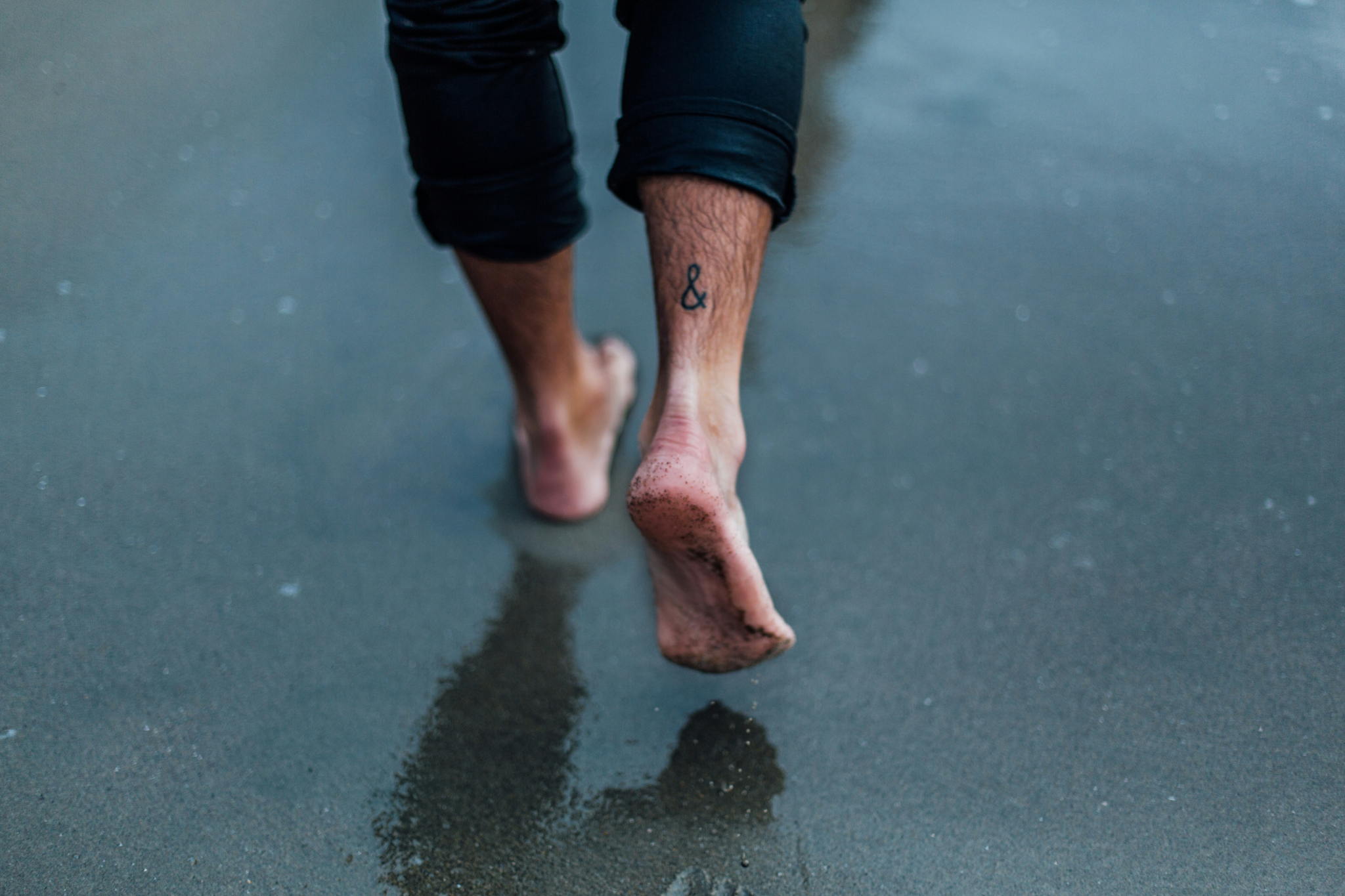
• Barefoot: want to go running? This can strengthen your foot muscles, but be aware of the increased risk of forefoot problems. And walking barefoot? Think about sharp objects and uneven surfaces on your path.
• €200 trainers: price is no guarantee. Fit and support are more important than the brand.
• High heels: the absolute culprit, strongly linked to hallux valgus.
Towards the future
The FootPath project officially runs until September, but the team wants to continue building. The tool currently contains five diagnoses – such as hallux valgus – but the ambition is much greater. ‘It contains a ridiculous amount of information, literally thousands of pieces,’ Hannelore says proudly. ‘What we have now is just a mini version. Ultimately, we want to offer orthopaedic technologists worldwide an evidence-based foundation.’
A big step forward
In a world where the same complaint often results in ten different treatments, Mobilab & Care brings a little more order to the chaos. Their message is clear: personalised care does not have to be random. ‘Our research is about inclusion and ensuring that everyone can participate,’ concludes Hannelore. For millions of people with foot pain, this can make the difference between limping along and standing firmly in life.
Or as Veerle succinctly summarises: ‘Do your arch supports hurt and are they sitting in the cupboard? Go back. Do you have hallux valgus? Perhaps a simple toe spreader will help more than surgery. Arch supports should not be expensive items that gather dust, but aids that really help people.’
So: listen to your feet. They often whisper what they need. Give them that care. Whether you walk in trainers, stroll in flip-flops or experiment barefoot: make sure your feet get the support they deserve. Because if you take good care of your feet, you'll be stronger. Always.
